Cursor and the Netflix effect: why every AI company will come crawling back
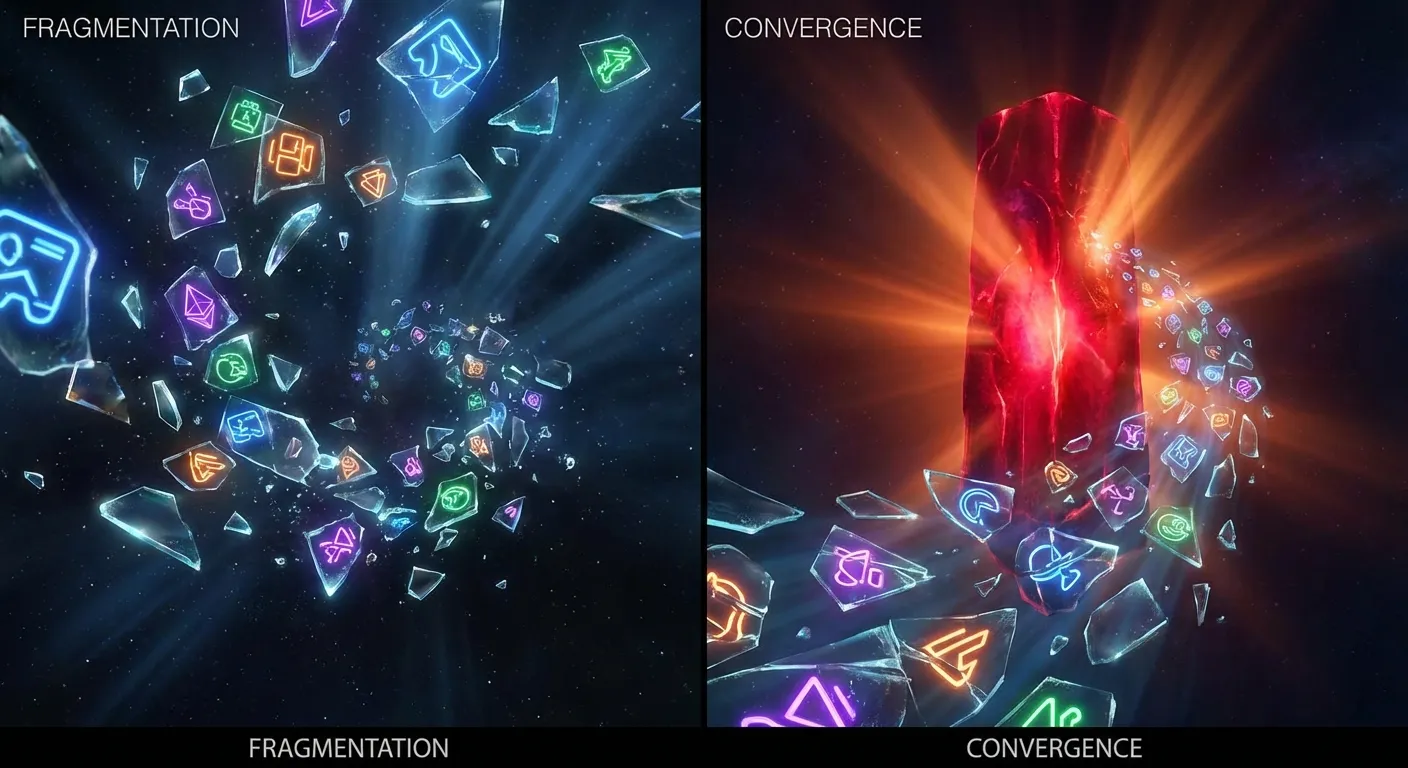
Remember when Netflix was it? One subscription, one app, everything in one place. Then HBO pulled their content. Disney yanked their catalog. Paramount launched Paramount+. Peacock... happened. Within three years, streaming went from one destination to a dozen forgettable apps, each with their own billing page and password reset flow.
You know how that story ends. Netflix just dropped $82.7 billion to acquire Warner Bros., HBO, and HBO Max. Disney is folding Hulu back into Disney+. The Great Re-Aggregation is here, because running a streaming platform turns out to be a completely different business than making great content.
I've been watching the AI coding tools space follow the exact same playbook. Cursor is Netflix.
Everyone wants their own streaming service
Cursor launched as a fork of VS Code with AI baked into the editing experience, not bolted onto it. For a while, it was the only IDE that made AI coding feel native. It was "vibe coding" before anyone coined the term.
Then model providers looked at Cursor's growth trajectory ($1M to $1B+ ARR in under two years, the fastest-scaling SaaS in history) and had the same reaction HBO did: "We make the models. Why is someone else owning the interface?"
The result:
- Anthropic launched Claude Code, now at $2.5B annualized revenue
- OpenAI shipped the Codex desktop app for macOS on February 2, plus a CLI and IDE extensions for VS Code, Cursor, and Windsurf
- Google rebranded Project IDX to Firebase Studio with Gemini agents, MCP support, and three distinct agent modes
- JetBrains built Junie with multi-model support
Everyone thinks they can own the full stack. History says otherwise.

HBO made great TV. Their streaming app was awful.
HBO produced some of the best television in history. Their app was a dumpster fire. Buggy interfaces, confusing rebrands (HBO Now, then HBO Max, then Max, now back to HBO). Brilliant content, terrible distribution.
The same split applies here. Anthropic makes arguably the best coding model right now. But building and maintaining a world-class IDE is a fundamentally different discipline than training language models.
An IDE needs an extension ecosystem, rock-solid Git integration, multi-language LSP support, debugging tools, terminal management, team collaboration features, and code review workflows. Cursor has 300+ engineers focused exclusively on this. They're sitting on a $29.3 billion valuation and just acquired Graphite's code review platform for "way over" its $290M valuation to own the full loop from generation through merge.
Meanwhile, model providers are splitting attention across training next-gen models, running inference infrastructure, building API platforms, AND shipping a competitive IDE. That's four businesses at once. HBO couldn't manage one streaming app without rebranding it three times.
Google's Firebase Studio is still in preview, not even subject to an SLA. OpenAI's Codex app launched macOS-only with Windows "planned." These aren't products built by teams that live and breathe developer tooling.
The math kills everyone except the top three
Netflix spent $17 billion on content in 2025. Disney+ lost $4 billion before its first quarterly profit. Paramount+ never got there.
The AI coding tools market is $4 billion today. The top three players (GitHub Copilot at 42%, Cursor at 18%, Claude Code growing fast) already hold 70%+ of it. Everyone else is fighting over scraps.

Firebase Studio, standalone Codex, Junie... they're all competing for that remaining 30%, while also competing with each other. At some point, the economics force the same choice every mid-tier streamer faced: keep burning resources on a mediocre platform, or partner with someone who already has the users.
The consolidation signals are already here. Cursor acquired Graphite in December. Anthropic bought Bun (the JavaScript runtime) the same month. These aren't random purchases; they're companies building moats around their core business and pulling back from areas where they don't have an edge.
What comes back first
Netflix didn't get all the content back overnight. First came licensing deals. Then bundles (the "frenemy" model AlixPartners identified for 2026). Then the $82.7 billion acquisition.
I expect the same phased return for Cursor:
- Model integrations -- already happening. Cursor supports Claude, GPT, and Gemini today
- Preferred partnerships -- Cursor deepened ties with Google and Nvidia during its Series D
- Exclusive agent features where specific models work best inside Cursor's framework
- Possible acquisitions -- at $29.3B, Anysphere has the war chest
The open question is GitHub Copilot. Backed by Microsoft's distribution, it could be the Disney+ of this story -- big enough to survive independently. But that still leaves most providers ending up as content suppliers to someone else's platform, not platform owners themselves.
Key takeaways
- Model providers building IDEs mirrors content studios launching streaming apps. Different business, different competency
- The top 3 already own 70%+ of the market. Late entrants face the same economics that killed Paramount+
- Cursor's Graphite acquisition signals platform ambition: own the full lifecycle from writing to code review to merge
- The re-aggregation will be gradual. Integrations first, partnerships next, then consolidation
- If you're picking a tool today, choose the one that supports multiple models. That's your hedge
The streaming wars proved that making great content and running a great platform are different skills. The AI coding wars are learning the same lesson. Some companies just haven't gotten the bill yet.
References:
- Netflix to acquire Warner Bros. in $82.7 billion deal -- Variety
- Cursor hit $1B ARR: the fastest-scaling SaaS ever -- SaaStr
- Cursor owner Anysphere agrees to buy Graphite code review tool -- InfoWorld
- Streaming wars 2026: the rise of the frenemy -- AlixPartners
- Bun is joining Anthropic -- Bun Blog